Kapelle
Chapel St. Valentin
Kommen
The year 1730 inscribed on the building likely indicates an earlier planning phase. In the early years, a service was held weekly; the faithful also attended the parish church in Longkamp.
In 1913, the chapel was extensively renovated for 745 marks, followed by another renovation after World War II.
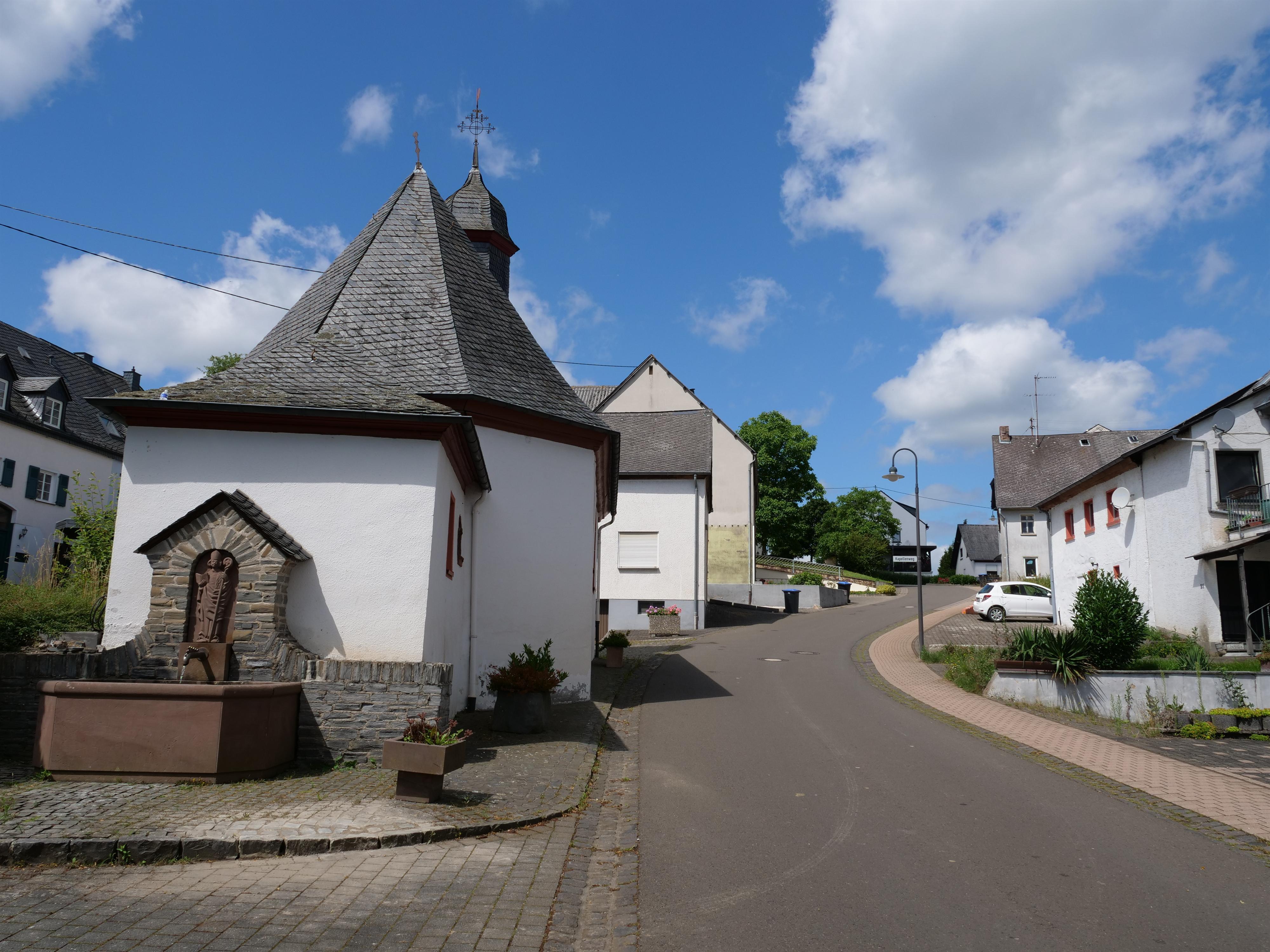
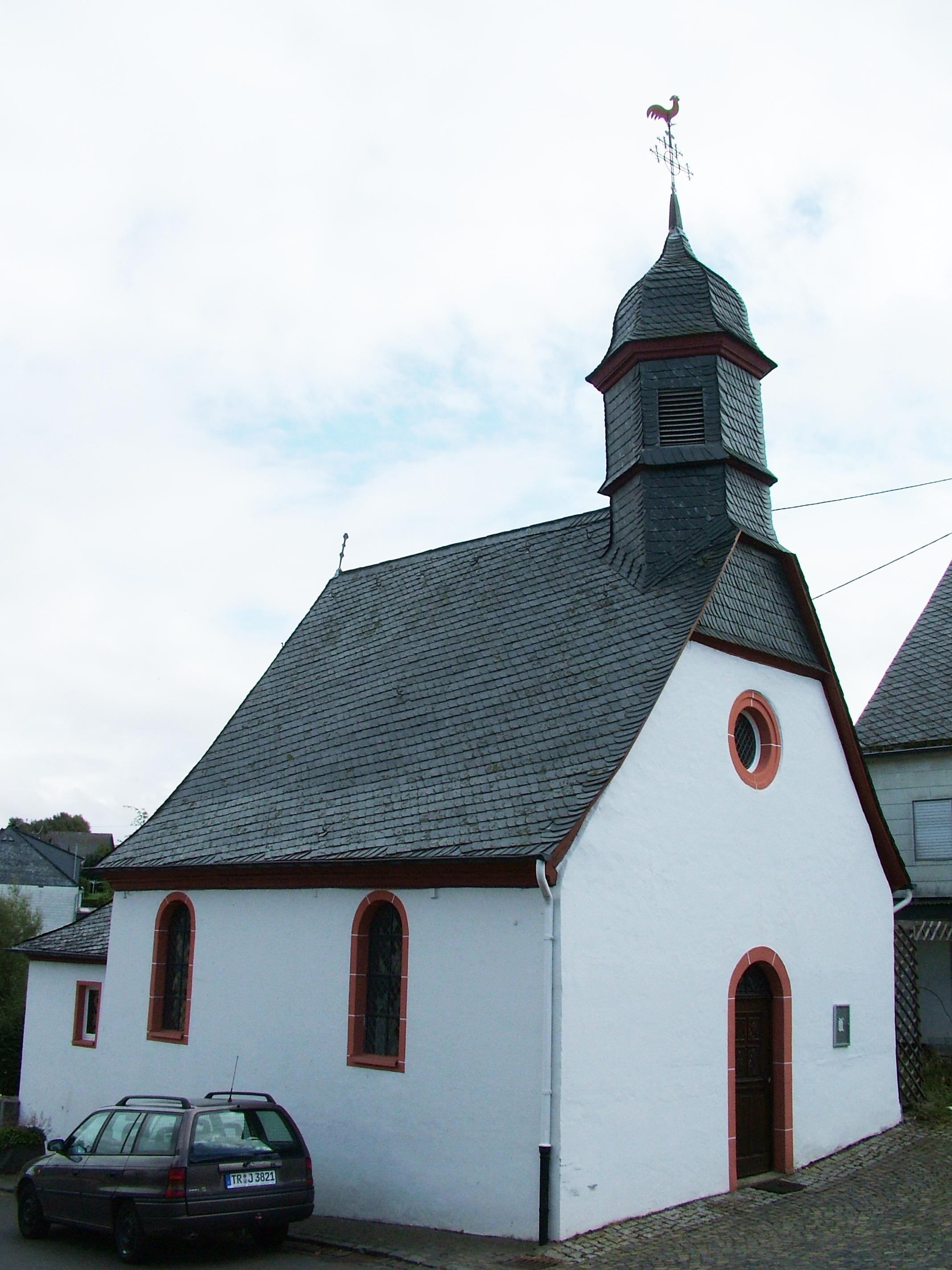
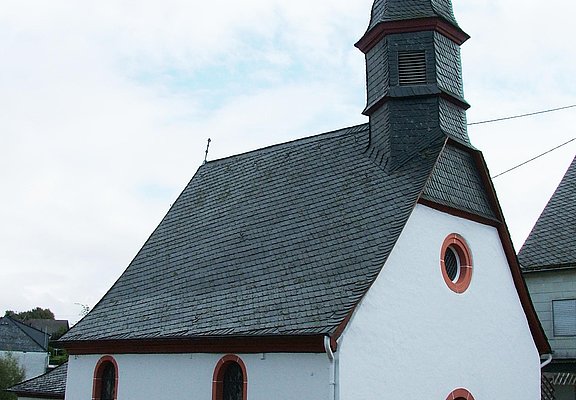
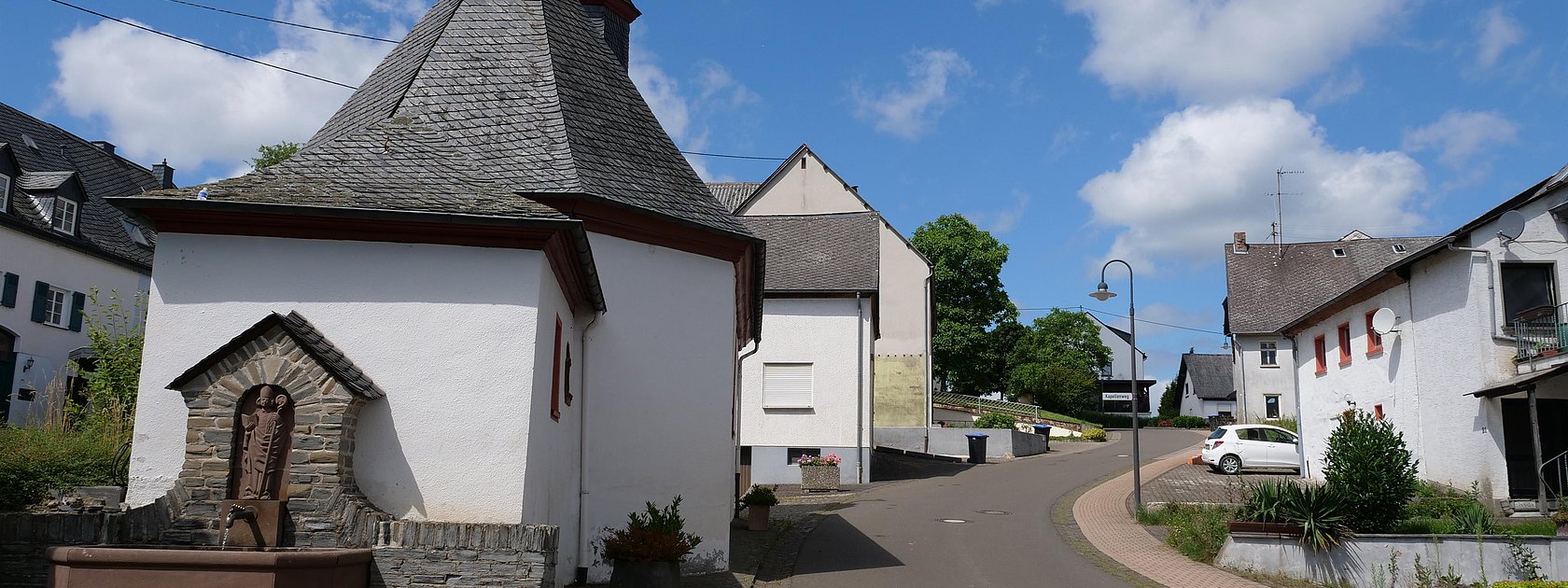
Architecturally, St. Valentin presents itself as a plastered quarry stone building in hall form with a three-sided chancel, round-arched windows, and a curved wooden barrel ceiling. Particularly striking is the six-sided bell tower with a curved hood above the entrance gable. The bell was cast in 1835 by Alexander Horst from Trier. Attached to the chancel is the sacristy, on the outer wall of which is an impressive sandstone relief from the 18th century featuring a Calvary group embedded in it.
The art-historical centerpiece of the chapel is its magnificent wooden altar in the rococo style. The "Cultural Monuments of the Rhineland Province" describe it as a work featuring fine carvings, a painting of Saint Mary Magdalene kneeling before the cross, and an oval image of God the Father, flanked by floating angels. As a crowning feature, the altar bears a three-part coat of arms held by two griffins, depicting a bear in the upper field. The altar originally came from the chapel of the Kneipschen house in Bernkastel and was donated to Kommen in 1804 by the Electoral cellarer Bridoul. In 1913, it was restored by the sculptor A. Thienes from Wittlich.
It is noteworthy that the St. Valentin chapel – unlike nearly all other regularly used sacral buildings in the region – is owned by the local community of Kommen. Ecclesiastically, it long belonged to the parish of St. Andreas Longkamp; since January 1, 2022, it has been part of the newly established parish of Am Haardtkopf St. Christophorus. The pastoral caregiver is Pastor Markus Weilhammer from Monzelfeld. Further information can be found at www.katholisch-am-haardtkopf.de.
Impressionen